Materials
How Long Do Roofs Last in Central Florida's Heat & Humidity?
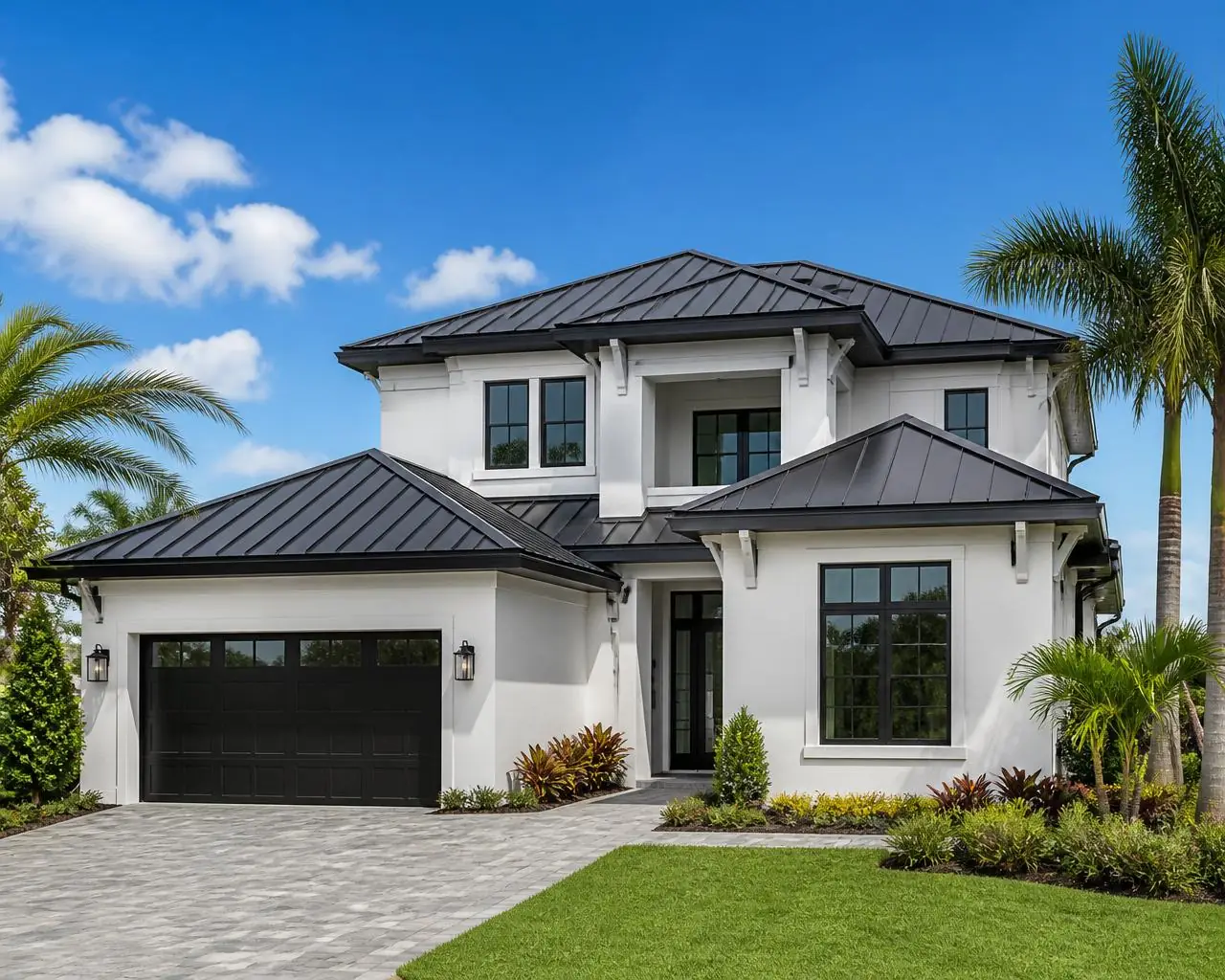
Why do roofs age faster in Florida than the national average?
Four forces gang up on a Volusia County roof. First, UV: Central Florida gets sun intense enough to dry out asphalt and chalk paint finishes years ahead of northern schedules. Second, thermal cycling — a dark shingle roof surface can swing well over 60°F between a summer afternoon and that same night, and thousands of those expand-contract cycles fatigue every material and fastener. Third, humidity feeds the algae, moss, and rot that northern roofs rarely fight year-round. And fourth, wind: the Atlantic hurricane season runs June 1 to November 30 every year, per the National Hurricane Center, and even run-of-the-mill summer thunderstorms deliver gusts that test shingle seal strips weekly.
Net effect: knock roughly 20 to 30 percent off the lifespan a material achieves in a mild climate, unless it is a material — like metal or tile — that shrugs most of these forces off.
Microclimate matters too. A roof shaded under DeLand's oak canopy runs cooler but traps leaf debris and moisture that feed algae, while a wide-open Deltona roof takes full sun all day and ages faster from UV. Lighter colors and reflective finishes shed a meaningful share of that heat, which is one reason light metal roofs hold up so well here. Neither situation changes what you should do — it just changes which failure mode shows up first.
How long does each roofing material last in Central Florida?
| Material | Central Florida lifespan | National typical | What ends it here |
|---|---|---|---|
| Architectural asphalt shingles | 15–25 years | 20–30 years | UV granule loss, failed wind seals |
| 3-tab asphalt shingles | 10–20 years | 15–20 years | Thinner mat, lower wind ratings |
| Metal (standing seam / rib panel) | 40–70 years | 40–70 years | Fastener wear, coastal salt on coatings |
| Concrete / clay tile | 40–50+ years (tiles) | 50+ years | Underlayment fails first, ~20–30 years |
| Flat / modified bitumen | 10–20 years | 10–20 years | Ponding water, UV blistering |
How long do asphalt shingle roofs really last here?
Asphalt is still the most common roof in Volusia County, and the honest local number is 15 to 25 years for architectural shingles — noticeably short of the "30-year" or even "lifetime" language on the packaging. Manufacturer limited warranties from GAF, Owens Corning, and CertainTeed cover manufacturing defects, not Florida weathering, and most prorate sharply after the first decade. Two upgrades earn their keep here: algae-resistant granules (the black streaks on Florida roofs are algae) and higher-wind-rated shingles installed with the enhanced nailing the Florida Building Code requires. Installation quality moves the needle as much as the product — the same shingle can die at 14 or thrive at 24 depending on nailing, ventilation, and flashing.
Not Sure How Many Years Your Roof Has Left?
We'll inspect it free, photograph what we find, and give you an honest number — whether that's two years or fifteen.
How long do metal roofs last in Florida?
Metal is the longevity king in this climate: 40 to 70 years is common, which means a metal roof installed in your forties is plausibly the last roof you buy. It sheds UV, does not support algae, and modern panels carry the high wind ratings Florida code demands. Two local caveats: exposed-fastener systems need their screws and washers checked roughly every 10 years, and near the coast — think Ormond Beach — salt air makes coating choice matter. Our metal roofing service covers panel styles and what they cost compared to shingles.
How long do tile and flat roofs last?
Tile is Florida's trick question. Concrete and clay tiles themselves commonly last 40 to 50 years or more — but the waterproofing is actually the underlayment beneath them, which commonly fails at 20 to 30 years. That is why a beautiful 25-year-old tile roof can leak: the tiles are fine, the membrane under them is done, and the fix is lifting and relaying tile over new underlayment. Flat and low-slope sections — common over Florida additions and porches — commonly last 10 to 20 years, with ponding water as the usual killer. Because these sections fail early, pairing them with prompt roof repair is what protects the rest of the house.
How can you add years to your roof's life?
- Get an inspection every year or two, and always after a named storm — small fixes early are the cheapest years you can buy
- Keep valleys, gutters, and roof surfaces clear of oak and pine debris that traps moisture
- Ventilate the attic properly — a cooler attic slows shingle aging and trims cooling bills, which is why ENERGY STAR treats the attic as prime efficiency territory
- Fix cracked pipe boots and lifted flashing immediately — most "roof failures" start as $300 details
- Trim branches back so they cannot abrade shingles or drop limbs in a storm
- After any big blow, run our free storm damage checklist before problems soak in
When does roof age start affecting your insurance?
In Florida, age is an insurance issue before it is a leak issue. Under the state's 2022–2023 reforms, insurers generally cannot refuse to write or renew a policy solely because a roof is under 15 years old — and for older roofs, an inspection showing at least 5 years of remaining useful life generally preserves eligibility. The Florida Office of Insurance Regulation publishes consumer guidance on these rules. Practically, that makes the late teens the moment to get your roof's remaining life documented — a professional inspection with photos is exactly what carriers want to see. (General information, not insurance advice.)
What should Volusia County homeowners do next?
If your roof is past year 12 or you do not know its age, start with our free roof self-check, then let us put real eyes on it. Heritage Roofing & Repairs (license CCC1333379) has worked on Volusia County roofs since 2010, and we will tell you the honest number — including when the answer is "your roof is fine, call us in five years."
Find Out How Many Years Your Roof Has Left
Free inspection, photo report, and a straight answer from a local licensed contractor — no scare tactics, ever.
Sources
- NOAA National Hurricane Center — hurricane season dates and storm climatology
- GAF — shingle products and limited warranty terms
- Owens Corning — shingle products and warranty information
- ENERGY STAR — attic, ventilation, and roof efficiency guidance
- Florida Office of Insurance Regulation — roof age and homeowners insurance rules