Maintenance
Signs You Need a Roof Replacement in the Florida Climate
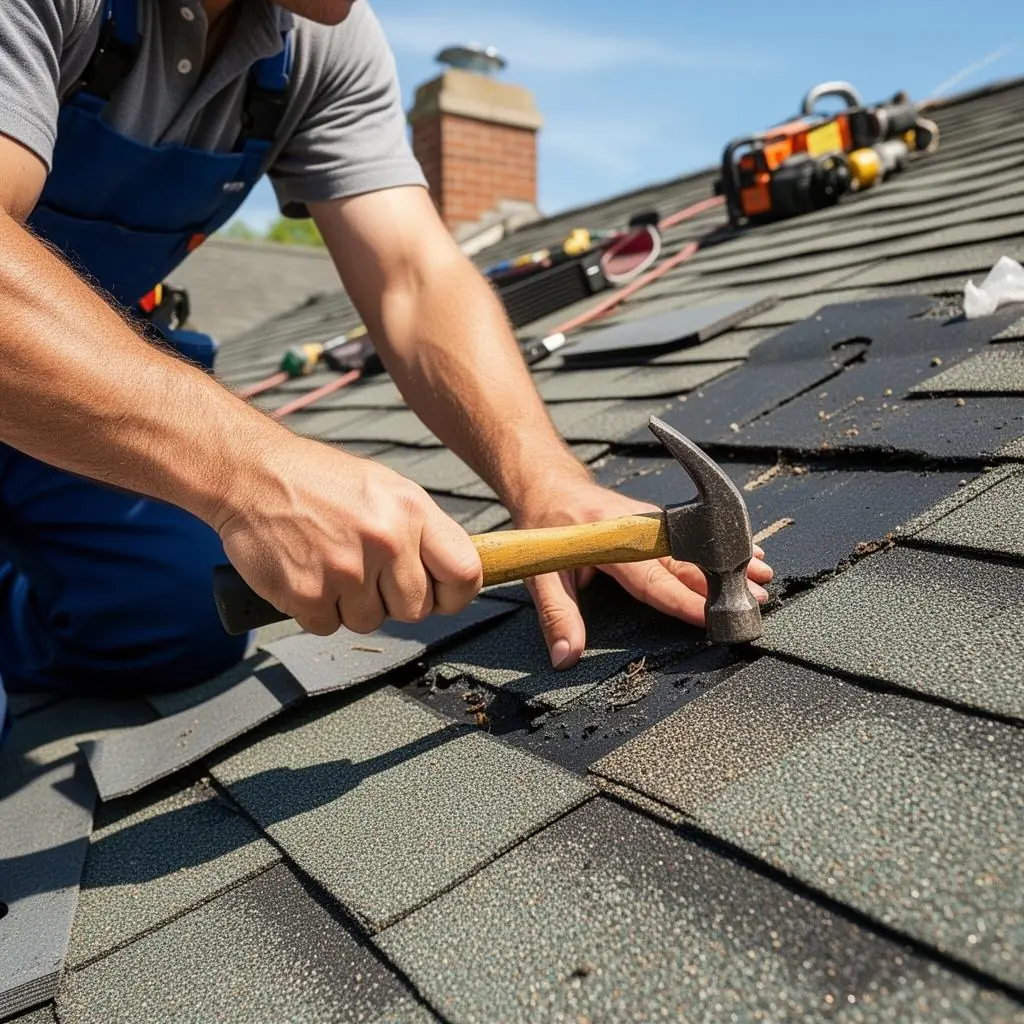
Why does Florida's climate wear roofs out faster?
A roof in DeLand simply lives a harder life than the same roof in Ohio. Central Florida's intense UV bakes the oils out of asphalt shingles and loosens the protective granules that shield them from the sun. Year-round humidity feeds algae and rot. Afternoon thunderstorms hammer the surface most summer days, and the Atlantic hurricane season — June 1 through November 30, per the National Hurricane Center — pries at every sealed edge for six months a year.
The result: asphalt shingle roofs that commonly last 20 to 30 years nationally last more like 15 to 25 here. That gap is why the signs below tend to show up years earlier than homeowners expect — and why catching them early matters.
What are the warning signs on the roof itself?
You can spot most of these from the ground or a ladder at the gutter line — no need to walk the roof:
- Granule loss: bald or shiny patches on shingles, and gutters full of what looks like coarse black sand. Granules are the shingle's sunscreen; once they go, UV destroys the asphalt underneath quickly.
- Curling, cupping, or clawing shingle edges — a classic sign of heat aging and the end of a shingle's flexible life.
- Cracked, split, or missing shingles across multiple slopes rather than in one spot.
- Tabs lifting or blowing off in ordinary 30–40 mph thunderstorm gusts — a sign the adhesive seal strips have failed roof-wide.
- Rusted, lifted, or repeatedly patched flashing around chimneys, walls, and valleys.
- A sagging ridge line or wavy, spongy decking — the most serious sign, because it means water has reached the wood structure.
Manufacturers like GAF publish good visual guides to shingle aging, and our free roof self-check tool turns this list into a five-minute, question-by-question walkthrough for your own house.
What signs show up inside your home?
Roofs often announce failure indoors before the outside looks bad:
- Brown or yellow ceiling stains that come back after you paint over them
- Daylight visible through the attic decking, or damp, matted insulation
- A musty attic smell after rain — a sign of slow, chronic moisture
- Peeling paint or bubbling drywall near exterior walls and ceilings
- Cooling bills creeping up — a failing roof and cooked attic make your AC work harder, which is why ENERGY STAR puts so much emphasis on the roof and attic in home efficiency
One stain from one storm can be a $400 repair. Stains in different rooms across different seasons usually mean the whole system is letting go.
Do the other roofs in your neighborhood matter?
More than you would think. Volusia County subdivisions tend to be built in waves, which means every roof on your street took the same storms and the same sun, and started the clock the same year. When two or three replacement crews show up in your neighborhood in the same season, your roof is usually on the same schedule — even if it still looks fine from the driveway. Insurance non-renewals often arrive in waves for the same reason. If the house next door just replaced an 18-year-old roof, treat it as a free data point about yours, and get ahead of the rush before storm season books every crew in the county.
Seeing Two or More of These Signs?
Get a free, no-pressure inspection with photos. If a repair will honestly solve it, that's what we'll recommend — we've worked that way since 2010.
How old is too old for a Florida roof?
Age alone is a sign. Asphalt shingles commonly reach end-of-life at 15 to 25 years here, tile underlayment at roughly 20 to 30 even when the tiles themselves look fine, and metal commonly runs 40 to 70 years. If you don't know your roof's age, Volusia County permit records will usually tell you, since roof replacements require permits countywide.
Age also drives insurance. Under Florida's 2022–2023 reforms, insurers generally can't drop or refuse a home solely because the roof is under 15 years old — and for older roofs, an inspection showing at least 5 years of remaining useful life generally preserves eligibility. The Florida Office of Insurance Regulation publishes consumer information on these rules. In practice, a roof in its late teens is worth watching closely, both for leaks and for your renewal. (This is general information, not insurance advice.)
When is repair enough — and when is replacement smarter?
A simple framework we use on every inspection:
- Repair when damage is localized, the decking is sound, and the roof has 5+ years of realistic life left — a targeted roof repair is the cheaper, smarter call.
- Replace when problems are widespread across slopes, leaks keep appearing in new places, or the roof is at the end of its Central Florida lifespan — at that point repairs are rent, not a fix.
Florida's rules help more than they used to: since 2022, roofs built or replaced under the 2007 Florida Building Code or later are generally exempt from the old "25% rule," so storm damage to one section can often be repaired to match rather than forcing a full replacement. When replacement genuinely is the answer, our roof replacement service covers what the process looks like, and we always show you the photos behind the recommendation.
What should you do right after a storm?
Storm damage compresses the timeline. Document everything within days — wide photos, close photos, date stamps — and keep receipts for any emergency tarping. Florida law now generally gives you one year from a hurricane's landfall or a windstorm to file a claim, and FEMA recommends photographing damage before any cleanup. Our free storm damage checklist walks through the first 48 hours step by step.
What's the next step for Volusia County homeowners?
Start free: run the roof self-check from your driveway, then book a professional set of eyes. Heritage Roofing & Repairs (license CCC1333379) has inspected and replaced roofs across DeLand, Deltona, and the rest of Volusia County since 2010 — and every inspection ends with a straight answer: repair, replace, or leave it alone.
Get a Straight Answer About Your Roof
Free inspection, photo documentation, and an honest repair-or-replace recommendation from a local, licensed contractor.
Sources
- NOAA National Hurricane Center — Atlantic hurricane season dates and storm data
- Florida Office of Insurance Regulation — roof age and insurance eligibility rules
- GAF — shingle aging and maintenance guidance
- ENERGY STAR — roof, attic, and home efficiency resources
- FEMA — post-storm documentation and recovery guidance
- Volusia County Government — roofing permit records